Rare Pokémon Cards Explained: What Makes a Card Valuable?
Introduction
The Pokémon Trading Card Game has grown from a simple childhood hobby into one of the world’s most prominent alternative-asset markets. While printers have issued millions of items over the decades, only a tiny percentage become highly sought after. So what separates a generic bulk item from a holy grail that collectors actively hunt for?
In this comprehensive market guide, we will break down the structural elements of the hobby. We have Rare Pokémon Cards Explained below so you can decode exactly what drives secondary market prices. Additionally, this guide outlines how to evaluate your current collection with absolute certainty.
Rare Pokémon Cards Explained: Rarity Levels and Availability
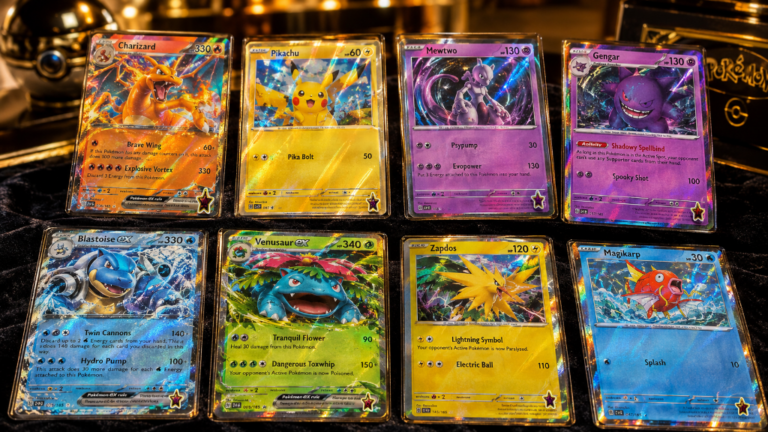
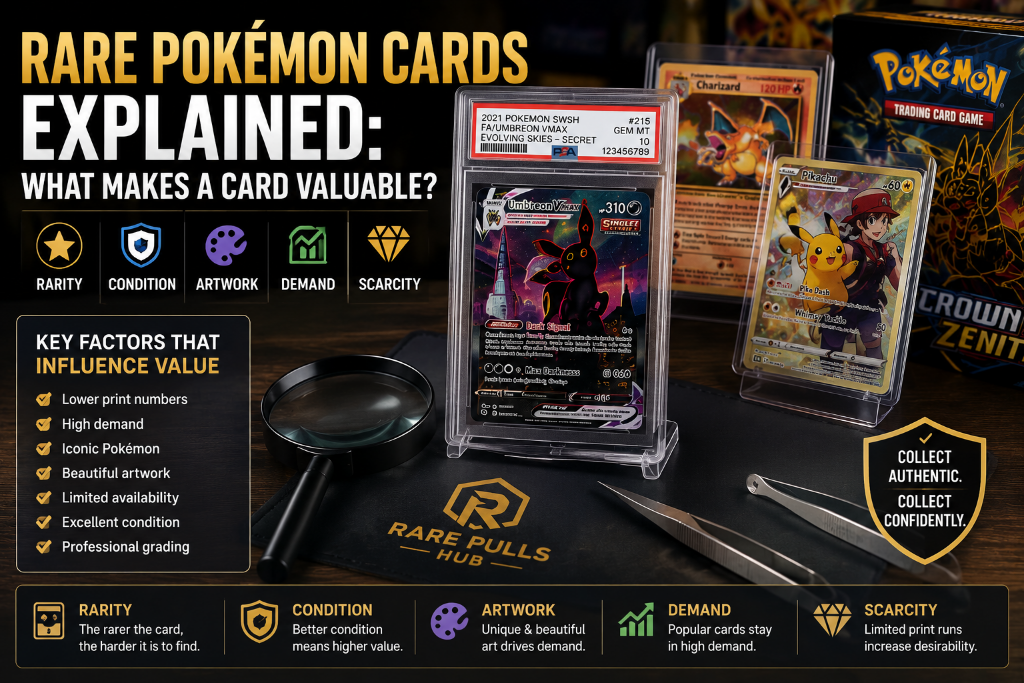
A primary influence on any collectible’s secondary market value is its core manufacturing rarity. The Pokémon TCG features a highly complex hierarchy of rarity levels to categorize different pulling odds. These structural tiers include basic Double Rares, Illustration Rares, Special Illustration Rares, Ultra Rares, and Hyper Rares.
Generally, cards that are printed in smaller quantities are much more difficult to pull from packs. Consequently, this limited supply makes them significantly more desirable among high-end collectors. Furthermore, limited availability stretches far beyond standard set checklists. Some of the most valuable items were only released during exclusive regional tournaments, as special event promos, or inside highly restricted print runs that have long been discontinued.
Rare Pokémon Cards Explained: The Impact of Condition and Grading
Two visually identical cards can possess wildly different values depending entirely on their physical condition. Serious hobbyists examine raw cardboard under intense studio lighting to look for specific manufacturing and handling defects.
To achieve premium value, an item must feature these pristine characteristics:
- Flawless Edges: The perimeter must be completely free of silvering, chipping, or white paper wear.
- Perfect Centering: The front and back borders must align symmetrically with uniform pixel margins.
- Pristine Surfaces: The card face must show zero print lines, scratches, or cloudy texturing.
- Crisp Geometry: The corners must stay perfectly sharp without any structural bends, dents, or soft creases.
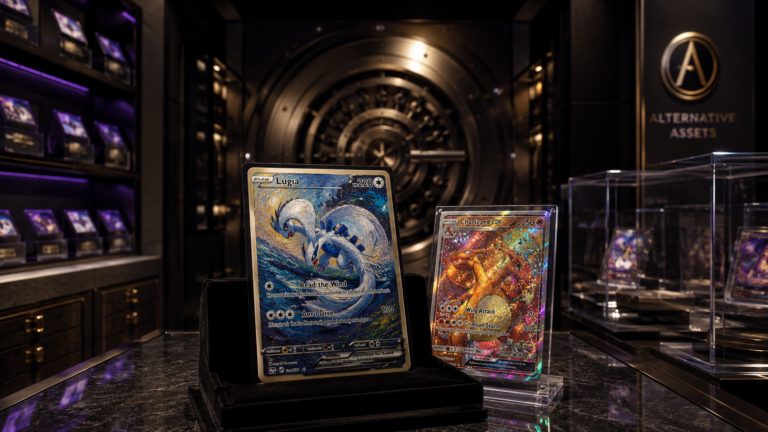
Because human evaluation can be subjective, many investors choose to utilize professional grading services. Third-party authenticators independently evaluate surface quality, corners, centering, and edges before sealing the card inside a tamper-proof protective slab. Ultimately, this independent condition verification makes it much safer for buyers to complete high-tier transactions online.
Rare Pokémon Cards Explained: Character Popularity and Artwork Appeal
Even an incredibly rare print may struggle to command a high price tag if the featured character lacks fan demand. Certain iconic Pokémon consistently dominate the hobby and attract the highest volume of liquidity. For instance, legendary mascots like Charizard, Pikachu, Umbreon, Lugia, and Rayquaza maintain a permanent baseline of intense collector interest. Modern sets featuring these fan-favorite characters routinely experience much stronger demand than expansions centered around less popular species.
In tandem with character popularity, overall artwork quality plays a massive role in visual appeal. Today, standard cards are frequently overshadowed by beautiful Full Art layouts and breathtaking alternative art designs. A gorgeous, hand-illustrated Special Illustration Rare can easily skyrocket in value based purely on its aesthetic brilliance, even if its pull rates aren’t the tightest in the set.
Conclusion: Protect Your Vault with Rare Pulls Hub
Every trading card tells a unique story, but certain pieces stand out due to their rarity, condition, artwork, and historical relevance. Understanding these market dynamics allows you to build a premium collection that accurately reflects your personal interests while protecting your financial capital.
Whether you prefer holding factory-sealed boxes, pristine graded slabs, or raw illustration singles, proper preservation is everything. At Rare Pulls Hub, we are dedicated to helping enthusiasts collect with total peace of mind. We carefully inspect our inventory to provide premium, authentic collectibles for your personal vault. Are you ready to dive deeper into the hobby? Explore our verified storefront, check out our latest curated arrivals, and find [Insert Link Text Here: rare Pokémon cards explained] across our secure, collector-focused inventory today!
Frequently Asked Questions
Are older Pokémon cards always more valuable?
Not necessarily. While vintage Wizards of the Coast holographic cards command a massive nostalgia premium, select modern alternative-art sets also reach incredible price points due to intense collector demand.
Does professional grading automatically increase a card’s value?
Grading provides an official, independent condition score that makes an asset highly liquid. However, the final market price still relies heavily on the underlying rarity, character popularity, and broader market demand.
Why do factory-sealed products hold premium value?
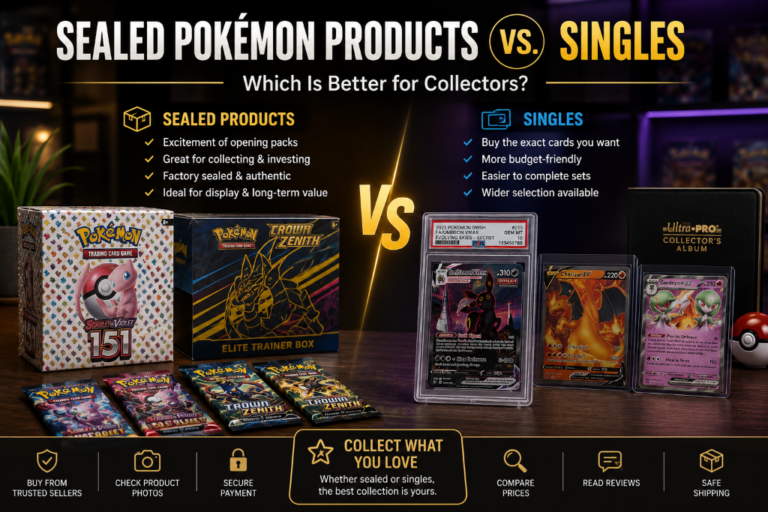
Factory-sealed booster boxes and Elite Trainer Boxes preserve the unhatched statistical odds of pulling top-tier chase cards. Therefore, they remain excellent long-term display pieces and highly sought-after alternative assets.