How to Tell if a Pokémon Card Is Rare: Beginner’s guide
Introduction
If you are brand new to the trading card community, learning how to properly identify your collection is an essential first step. Rare variants can be worth anywhere from a couple of dollars to thousands, depending heavily on their overall condition and secondary market demand. Fortunately, learning how to tell if a Pokemon card is rare only requires checking a few specific indicators printed on the cardboard itself.
Essential Methods for How to Tell if a Pokémon Card Is Rare
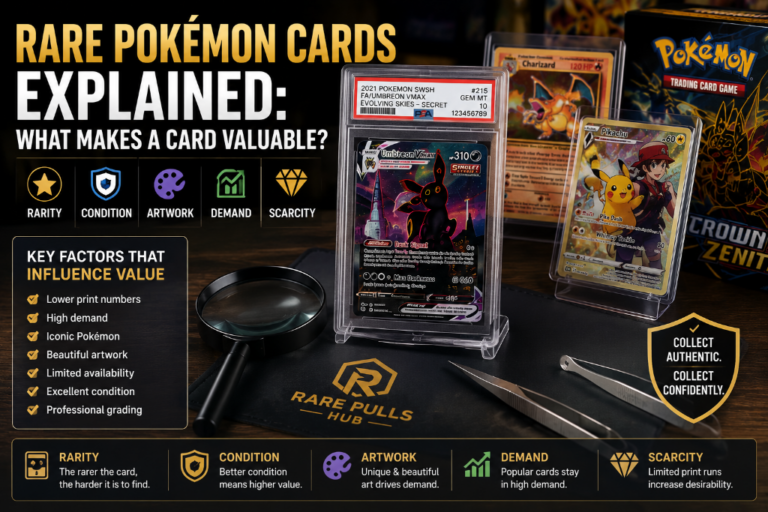
In addition, knowing what marks to look for prevents you from accidentally trading away a hidden gem. Let’s break down the exact visual cues that reveal an item’s true rarity tier
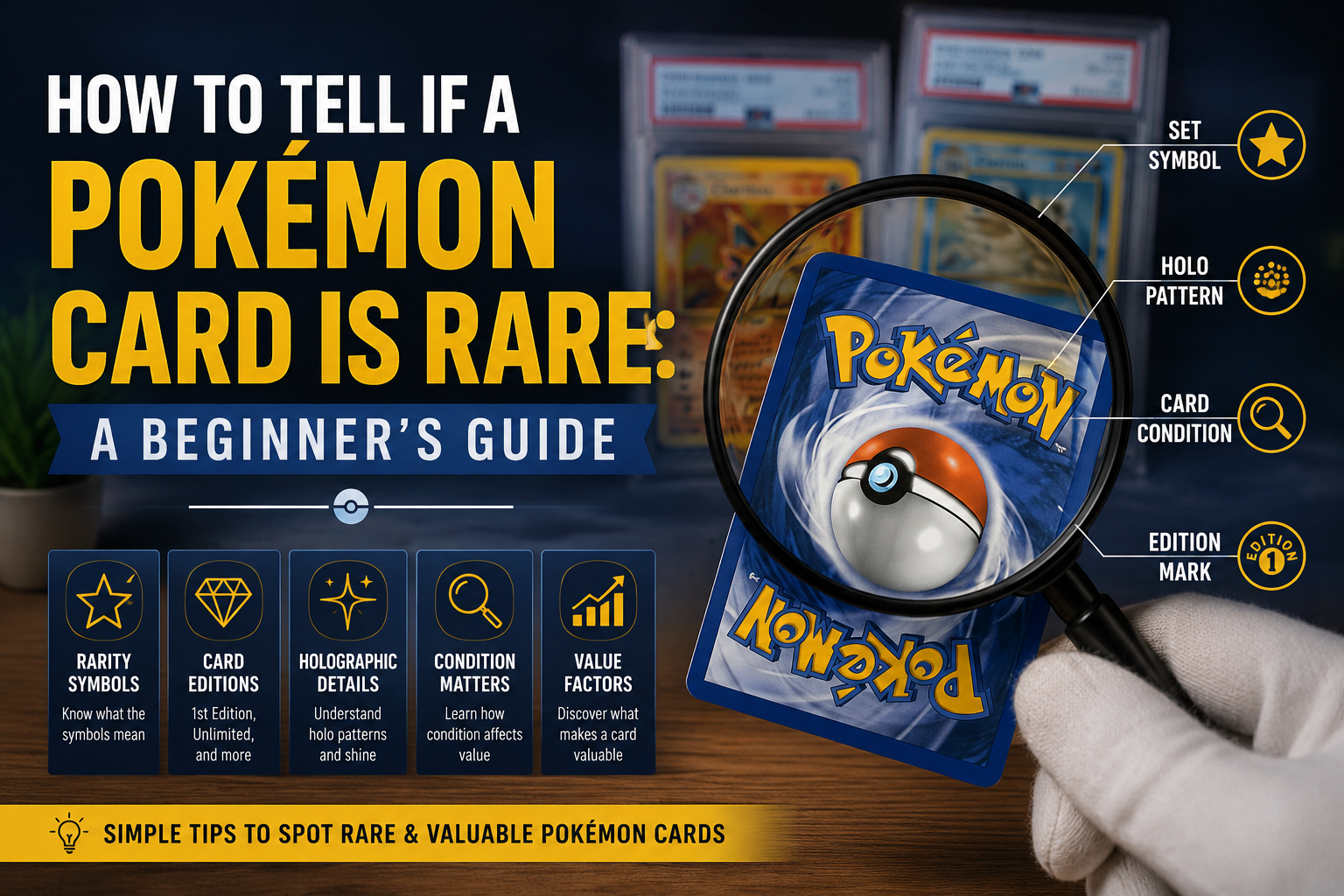
1.Check the Rarity Symbol
Look closely at the bottom border corner of your item to find these geometric markers:
- Circle: Indicates a common print with high distribution numbers.
- Diamond: Represents an uncommon item with a moderate pull rate.
- Star: Marks a rare card tier, which always holds higher initial value potential.
- Stars or Special Icons: Dictate ultra rare, secret rare, or promotional printings.
2. Look for Secret Rare Numbers
Check the collector sequence numbers printed on the bottom edge. If you spot a collector serial number that reads higher than the official maximum set size (for example, 105/102), you have a valuable secret rare layout on your hands.
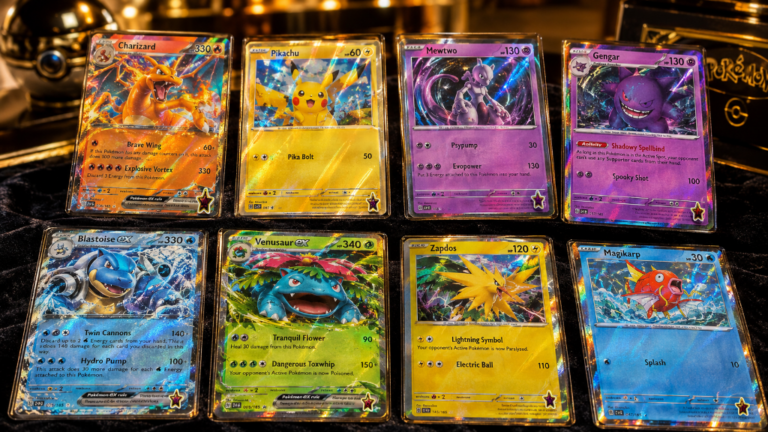
3. Examine the Foil Pattern
High-tier items feature distinct holographic treatments. Keep an eye out for cards with:
- Stunning full art designs covering the entire card face.
- Eye-catching rainbow color shifts.
- Shining gold borders or textured holographic patterns.
- Exclusive alternate artwork layouts.
4. Check the Card Condition
A rare card only maintains its market premium if it is kept safe from damage. Serious collectors look for:
- Sharp, crisp corners with no fraying.
- Flawless surfaces free of light scratches or scuffs.
- Perfect centering on the front and back borders.
- Clean, unblemished edges.
5. Research Current Market Prices
Before negotiating a trade, compare real-time market valuations. You can check historical sales trends across reliable collector platforms to see what buyers are actively paying.
To protect your elite hits, browse our official Rare Pulls Hub Shop to find premium card sleeves and hard cases. To check live marketplace valuation trends for individual cards, review the latest pricing indexes listed on TCGplayer.
Conclusion: Master Your Card Identification Skills
In conclusion, learning how to tell if a pokemon card is rare is a skill that saves you time and protects your hobby investments. Keep your items safely stored in protective sleeves, verify your symbols, and happy hunting!