
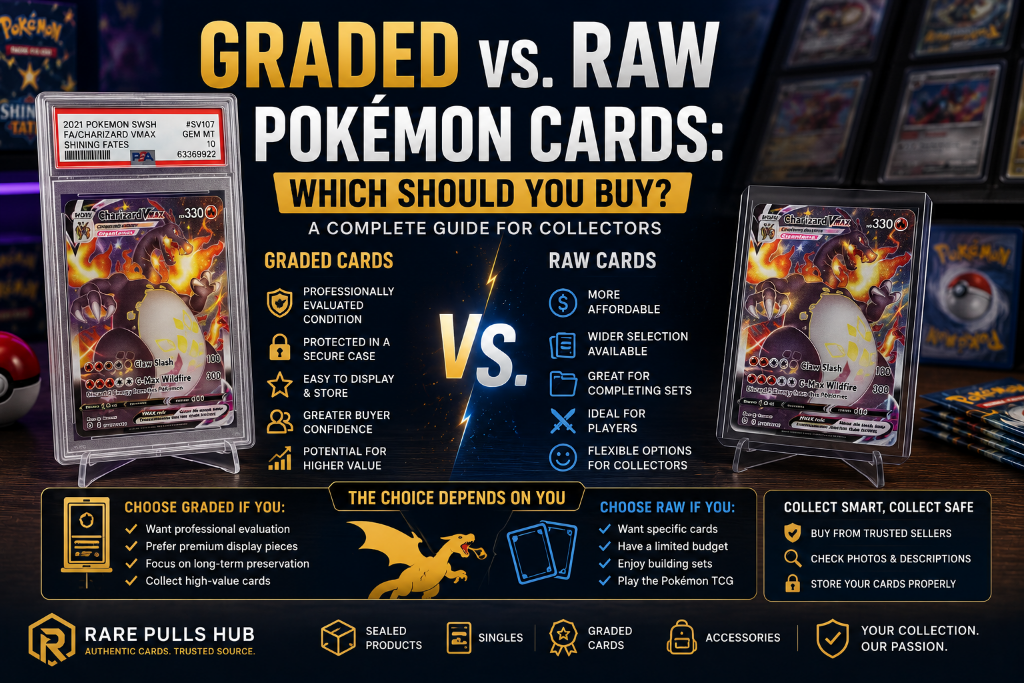
Graded vs. Raw Pokémon Cards: Which Should You Buy?
Introduction
Whether you are a new collector or an experienced Pokémon TCG enthusiast, you have likely come across two distinct types of collectibles. These are graded items and unslabbed singles. While both options hold an important place in the hobby, understanding their fundamental differences is vital. Doing so can help you make much smarter purchasing decisions based on your collecting goals and budget. In this market-ready guide, we will break down the structural advantages of each format. Let’s explore the debate of graded vs. raw Pokémon cards in depth so you can invest in the right assets for your personal collection vault.
Graded vs. Raw Pokémon Cards: The Advantages of Graded Gems
graded Pokémon card is an authentic collectible that has been professionally evaluated for its physical condition by a recognized third-party company. After a thorough multi-point inspection, the authenticator seals the card inside a rigid, tamper-proof plastic case. This holder includes a prominent label displaying an official condition score based on four core attributes: centering, surface quality, corners, and edges.
There are several major reasons collectors lean toward these premium slabs:
- Independent Condition Scores: First, you receive a completely objective assessment of the card’s physical state.
- Heavy-Duty Asset Protection: Second, the hard plastic holder shields the delicate cardboard from dust, moisture, scratches, and fingerprint oils. Therefore, it is ideal for secure, long-term display.
- Premium Showroom Presentation: Finally, the clear casing creates a beautiful, professional display appearance. Consequently, these items look incredible on showroom shelves, stands, and collector cabinets.
- Absolute Transaction Security: When you buy a slabbed card, there is zero condition guesswork involved. As a result, buyers enjoy much higher confidence during expensive online transactions.
Graded vs. Raw Pokémon Cards: The Benefits of Buying Raw Singles
Conversely, raw Pokémon cards are authentic pieces that have not passed through a formal third-party grading process. They are typically sold in their original manufactured state. To prevent condition decline, hobbyists usually protect them using soft plastic penny sleeves or semi-rigid top loaders. Raw cards remain the absolute most popular choice for general set builders and competitive players globally.
Choosing raw inventory offers several practical advantages for your physical portfolio:
- Highly Budget-Friendly Prices: Raw copies are generally available at much lower entry points than professionally slabbed versions of the identical card. Therefore, they are perfect for collectors working with limited capital.
- Accelerated Set Completion: If you are actively building a master set, ungraded singles allow you to acquire exactly what you need quickly.
- Massive Market Availability: There is an exponentially larger selection of unslabbed cards available across international marketplaces. Consequently, finding rare vintage pieces is much easier in this format.
- Ready for Competitive Gameplay: Finally, competitive players require loose cards. This flexibility allows them to slide the items into tournament-legal sleeves and use them inside active decks.
Which Path Best Fits Your Vault?
The right path ultimately depends on your personal collecting style, budget constraints, and aesthetic preferences. To help you visualize the core differences instantly, we have outlined the operational trade-offs below:
| Feature Evaluation | Graded Cards | Raw Cards |
|---|---|---|
| Professional Condition Check | Yes | No |
| Hard Armor Protective Case | Yes | No |
| Ready for Premium Display Stands | Yes | Requires Accessories |
| Low Capital Entry Cost | No | Yes |
| High Global Availability | Moderate | Yes |
| Perfect for Binder Collections | Moderate | Yes |
| Ready for Card Game Tournaments | No | Yes |
Fortunately, you do not have to limit yourself to one absolute strategy. Many experienced collectors build highly balanced portfolios by combining both approaches seamlessly. For example, they buy graded slabs to protect their favorite high-tier grails. Simultaneously, they maintain raw singles in side-loading binders to complete full expansion sets.
Conclusion: Shop Securely with Rare Pulls Hub
There is no universal winner in the classic debate of graded vs. raw Pokémon cards. If you appreciate professional condition verification and museum-grade display cases, graded items are an unmatched choice. However, if you are focused on completing binders with maximum flexibility and cost efficiency, raw singles are your best bet.
At Rare Pulls Hub, we are deeply passionate about helping collectors find premium, authentic trading card products. That is why our digital storefront carries a carefully curated selection of factory-sealed booster boxes, pristine raw singles, and professionally graded collectibles. Every item passes through our multi-point verification checks so you can shop with absolute peace of mind. Are you ready to upgrade your collection? Visit our secure inventory page, explore our newest arrivals, and compare our [Insert Link Text Here: graded vs. raw Pokémon cards] to secure your next high-value acquisition today!
Frequently Asked Questions
Are graded Pokémon cards always better than raw cards?
Not necessarily. Graded cards provide official condition protection and superior display value. However, raw cards offer much greater flexibility for binders and are significantly more affordable for everyday collectors.
Can raw cards be professionally graded later?
Yes, absolutely. If you own a raw card that is in pristine condition, you can submit it to a professional grading company at any time to lock in an official score.
Are raw cards completely authentic?
Yes. A raw card simply means the item has not been slabbed by a third-party grading company. Its underlying authenticity depends on the card itself and the reputation of the storefront where you bought it.