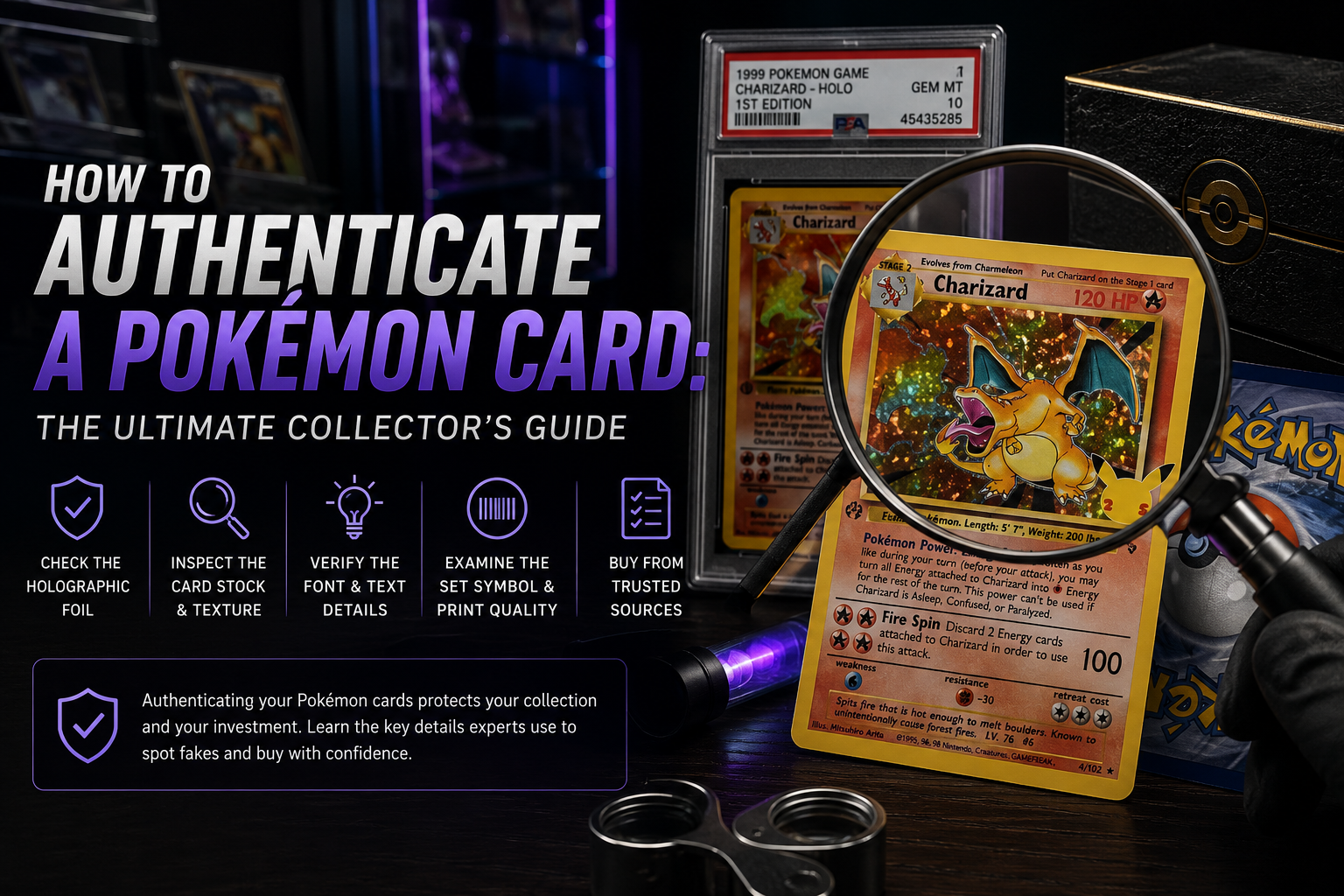
How to Authenticate a Pokémon Card: The Ultimate Collector’s Guide
The trading card market is booming, and high-value assets are changing hands daily. Learn how to authenticate a Pokémon card to protect your entire investment portfolio, as the rise in valuation has also brought an influx of highly sophisticated counterfeits. Spotting a fake isn’t just about saving a few bucks anymore.
Whether you are hunting for vintage Kanto classics or modern Special Illustration Rares, you must protect yourself. Knowing exactly how to authenticate a Pokémon card is the single most important skill any serious collector can master.
This step-by-step checklist will teach you how to analyze raw cards like a professional grading submission expert.
1. The Light and Rip Tests to Authenticate a Pokémon Card
Before diving into complex microscopic details, you can spot most low-tier fakes using simple structural diagnostics. Authentic cards are manufactured using a very specific process that counterfeits struggle to duplicate exactly.
The Light Test
Genuine cards are constructed by sandwiching a thin, opaque black layer between two pieces of premium paperboard. This internal layer gives the card structural integrity and prevents light from passing through cleanly.
- How to do it: Turn on your smartphone flashlight and place the card directly over the lens.
- What to look for: A genuine card will block almost all light, showing only a faint, dim glow. Fake cards lack the dense inner layer, causing the entire card to light up like a glowing piece of copy paper.
The Rip Test (The Last Resort)
We strongly advise against doing this on any card of value. However, it is the absolute definitive way to inspect bulk lots or unverified extras.
- What to look for: When torn cleanly in half, a real card will display a distinct, jagged black line embedded inside the cardboard layers. Counterfeits will show pure white paper edges because they lack this premium interior construction.
2. Inspect the Card Back to Authenticate a Pokémon Card
Counterfeiters spend 90% of their energy trying to perfect the front of a card to deceive rapid buyers. Because of this focus, they almost always mess up the intricate design details on the back. A quick glance at the reverse side is often the fastest way to authenticate a Pokémon card.
Look closely at the top right corner of the Pokéball on the card back. On an authentic product, the dark blue shading inside the framing lines features clear, distinct circular gradients. On a counterfeit, this area usually looks like a muddy, solid blur of dark ink. Authentic cards feature a crisp, deep dark blue border, while fakes often have a washed-out, faded light blue look with blurry, bleeding lines.
3. Font and Text Layouts to Authenticate a Pokémon Card
The Pokémon Company utilizes highly proprietary printing layouts and font families. Because matching typography across multiple language variants is incredibly difficult, text errors remain a massive dead giveaway.
Typography and Kerning
- Check the Font Style: Real cards use very specific font families (like Gill Sans or Futura) for titles, HP metrics, and attack text. Fakes often resort to standard system fonts like Arial or Times New Roman, which look immediately out of place.
- Inspect the HP Values: Look closely at the font thickness. Counterfeits frequently display HP numbers that are either too thin, overly bold, or poorly spaced.
Spelling and Energy Symbols
Read the flavor text and attack descriptions carefully. Fake factories often run text through cheap digital translation tools. This setup leads to glaring spelling mistakes, missing punctuation, or incorrectly sized Energy symbols inside the attack descriptions.
4. Test Textures to Authenticate a Pokémon Card
If you are dealing with high-end modern singles like Alternate Arts, Secret Rares, or Special Illustration Rares, texture is everything.
The Fingerprint Pattern
Modern ultra-rare cards feature a complex, beautiful layer of fingerprint-like texturing stamped directly onto the surface. This creates a distinct matte finish that diffuses light beautifully.
- The Fake Sign: Most cheap modern counterfeits are completely smooth and glossy to the touch. Even sophisticated fakes that attempt texturing usually feel like cheap plastic rather than premium cardboard.
The Diagonal Holo Sheen
Authentic English cards utilize a distinct diagonal holographic sheen that runs cleanly across the artwork layout. If you tilt a card and see a vertical rainbow sheen that covers the entire face of the card blindly, you are almost certainly looking at a fake.
5. Use Trusted Sources to Authenticate a Pokémon Card
Learning how to authenticate a Pokémon card gives you an exceptional shield on the open marketplace. However, the absolute safest strategy is to bypass the risk of unverified listings entirely. Sourcing your physical card assets from trusted environments eliminates the anxiety of product tampering completely.
If your ultimate goal is long-term vault preservation or pristine sequential grading with PSA or Beckett, starting with verified inventory gives you the ultimate baseline edge.